
The Eisenhower 1972 silver dollar value is determined by three distinct reverse varieties resulting from the use of different die types at the Philadelphia Mint.
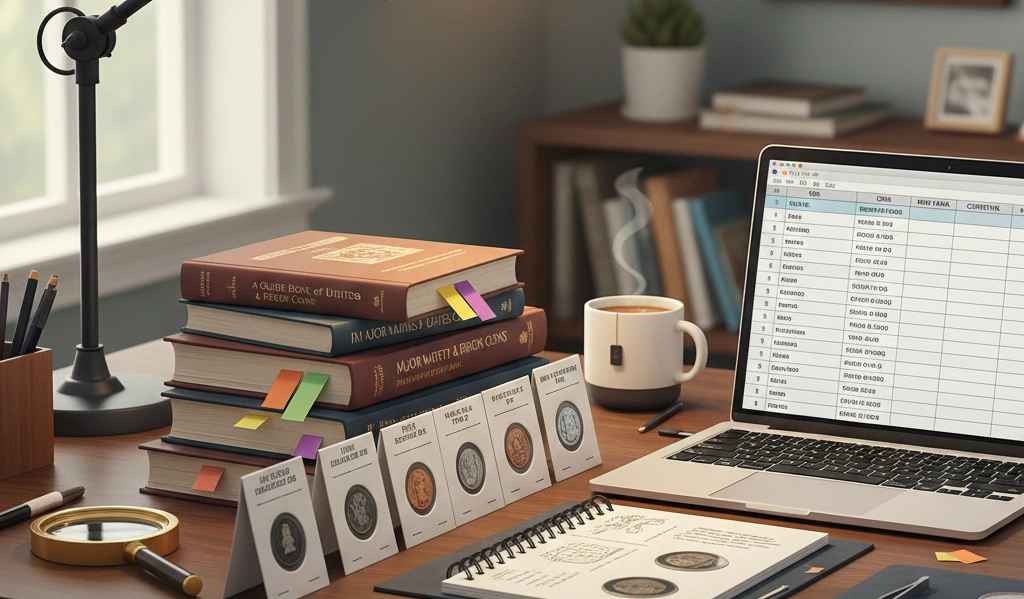
In addition to the standard copper-nickel coins, silver specimens for collector sets possessing different physical parameters were produced this year.
Circulation coins were manufactured from a clad copper-nickel alloy.
Characteristic | Value |
Weight | 22.68 grams |
Diameter | 38.1 mm |
Composition | 75% Copper, 25% Nickel (outer layer), 100% Copper (core) |
Designer | Frank Gasparro |
Philadelphia Mint Reverse Types (1972 No Mint Mark)
The primary difference between the varieties lies in the detailing of the Earth image above the eagle on the coin's reverse.
The use of various master dies led to the emergence of three types having different degrees of rarity.
Type 1: Low Relief
This type serves as the standard for most 1972 coins.
The Earth on the image is flat, with the outlines of the islands (Caribbean basin) being expressed weakly or absent.
Continent lines possess blurred boundaries due to the production characteristics of early-style dies.
Type 2: High Relief (Rare)
The emergence of this variety is linked to the mistaken use of a die intended for Proof quality coins (San Francisco).
The Earth has a pronounced convex shape.
The Caribbean islands appear as three distinct dots located below Florida.
The North American mainland possesses a deeply rendered relief.
The mintage of this variety is estimated at fewer than 100,000 specimens, making it the most expensive in the circulation series.
Type 3: Modified High Relief
Introduced into production in late 1972 for improving strike quality.
The Earth retains volume, yet the continent outlines are modified.
Central America and the Caribbean islands are clearly detailed, having a different position relative to Florida's latitude compared to Type 2.
Prices are indicated for coins certified by PCGS or NGC.
Grade (Sheldon Scale) | Type 1 (USD) | Type 2 (USD) | Type 3 (USD) |
MS 63 | $15 – $25 | $40 – $70 | $15 – $25 |
MS 65 | $45 – $80 | $500 – $900 | $50 – $90 |
MS 66 | $150 – $300 | $2,500 – $5,000 | $200 – $450 |
MS 66+ | $1,200+ | $15,000+ | $1,500+ |
1972-S Blue Ikes and Brown Ikes
The San Francisco Mint produced coins containing 40% silver, not intended for general circulation.
Two release forms exist: Uncirculated (in blue envelopes) and Proof quality (in brown boxes).
Silver Dollar Characteristic | Value |
Weight | 24.59 grams |
Composition | 80% Silver (layer), 20% Copper (layer), 21% Silver (core) |
Total Silver Content | 40% |
Uncirculated Mintage | 2,193,056 |
Proof Mintage | 1,811,631 |
The value of silver specimens demonstrates stability, being tied to the exchange price of the metal with a numismatic premium.
Specimens in MS 68 (Uncirculated) condition are valued at 120–180 dollars.
Proof quality coins in PR 70 Deep Cameo grade reach prices of 1,500 – 2,500 dollars.
Record Sales and Auction Statistics
Maximum prices are recorded exclusively for specimens in the highest state of preservation lacking field damage.
1972 Type 2 (No Mint Mark): The record was set in 2021 at a Heritage Auctions event. A coin in MS 66+ condition sold for 14,400 dollars.
1972 Type 1: A specimen in MS 66+ grade recorded a price of 5,875 dollars in 2022.
1972-D (Denver): Mintage amounted to 92,548,511 pieces. In MS 67 condition, the record price reached 12,000 dollars in 2017.
The price dynamics for MS 65 coins show an annual fluctuation within 2–4% depending on the volume of new entries into PCGS/coin value app registries.
Authenticity Verification Methods for Type 2
Identifying Type 2 requires a detailed inspection of the reverse under 20x magnification.
Island Shape: In Type 2, the Caribbean islands resemble drops or dots being isolated from the mainland.
Florida Boundary: The southern part of the peninsula has a rounded look, pointing directly toward the Earth's center point.
Luster Presence: Many Type 2 specimens possess a specific "satin" luster characteristic of Proof dies used on regular planchets.

Weight tolerance is not a criterion for determining the type, as all three types were struck on identical 22.68 g planchets.
1972 Minting Errors
Manufacturing defects occur less frequently than on smaller denomination coins due to the planchet size.
Off-Center Strike: Image displacement of more than 10% is extremely rare. The price for such specimens starts at 500 dollars.
Die Crack: Thin lines on the coin surface not being a sign of the type add 10 to 50 dollars to the value.
Double Die: No significant doublings comparable to rarities of other years have been recorded for 1972. Minor doublings of the date digits increase the price by 15–30%.
Value Decrease and Growth
Analysis of market trends over the last 10 years revealed the following patterns.
MS 63 - MS 64 Category: The price stagnates, showing 0.5% annual growth, being below the inflation rate.
MS 65 - MS 66 Category: Value growth amounted to 18% over the decade, driven by the decreasing supply of quality coins from bank rolls.
MS 66+ Category: The segment demonstrates volatility up to 15% per year, depending on the activity of major investors at auctions.
The number of certified Type 2 coins in MS 66 condition increased in registries by 8% over the last 5 years, leading to a 12% price correction downward from historical peaks of the 2010s.
Home Evaluation
Conducting a quality evaluation requires forming a set of equipment minimizing the risk of errors.
Using a free coin identifier app or a ring LED lamp creating a uniform light distribution across the coin surface is recommended.
Applying digital calipers allows for checking the diameter against the 38.1 mm standard, excluding the possibility of mechanical edge grinding.
Scales with 0.01 g precision are mandatory for identifying 40% silver coins (24.59 g) in cases of darkening or loss of original luster.
Type 1: Flat Earth, absence of island detailing.
Type 2: Convex Earth, three distinct dot-islands, high mainland relief.
Type 3: Volumetric Earth, detailed outlines of the Caribbean basin and Central America.
Conclusion
The 1972 Eisenhower dollar is a technically complex object for evaluation due to the variability of Philadelphia dies.
The decisive influence on the market price is exerted by the reverse type and the absence of microscopic metal surface defects.
Investment attractiveness is preserved mainly for the rare Type 2 variety and coins of all types in grades of MS 66 and higher.