
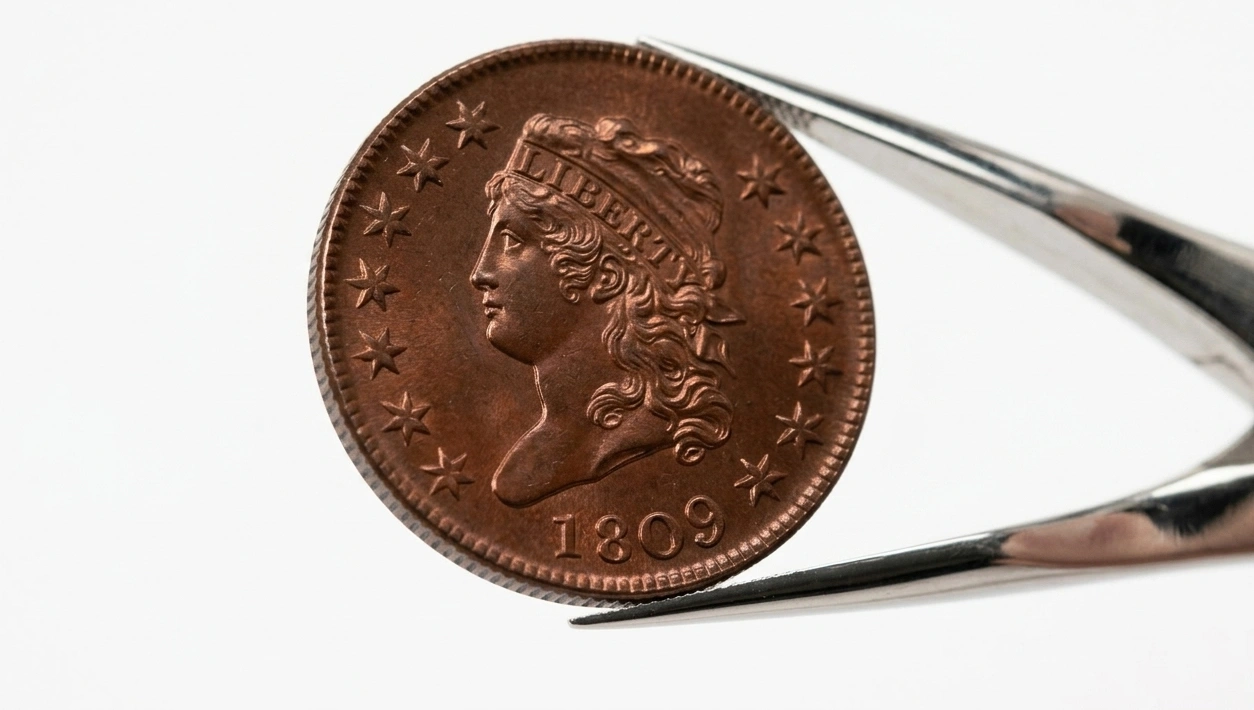
The market rewards patience more than urgency.
Executing the sale of rare numismatic objects requires strict adherence to specific timeframes.
Avoiding haste allows a seller to wait for the appearance of a targeted buyer.
In 2026, pricing precision relies on processing massive data sets from realized auction records.
Active periods to sell rare coins within the numismatic market fluctuate throughout the year.
Auction statistics from the past five years identify clear patterns in demand.
January — February: High activity (12% above average final bids)
May — June: Moderate activity (2% above average)
July — August: Low activity (5% below average)
October — November: Peak activity (15% above average)
Selling during low-demand periods leads to a reduced number of bidding participants.
→ Fewer bidders → Lack of competitive bidding → Minimum closing price
Peak activity traditionally aligns with major national coin conventions.
Grading Accuracy Before the Sale
A coin's physical state dictates its placement within a specific price bracket.
Utilizing expert evaluation from the Professional Coin Grading Service remains a mandatory requirement.
Value shifts based on grade increments:
Moving from MS64 to MS65: 40% price increase
Moving from MS65 to MS66: 85% price increase
Moving from MS66 to MS67: 150% price increase
In 2026, evaluation precision is reinforced by digital scanning tools.
Skipping certification when selling a rarity worth over $1,000.00 is considered a technical error.
Buyers generally avoid listings lacking a verified database number.
Pricing Based on Auction Records
Setting a price requires analyzing transactions from the last 24 months.
Using outdated price guides leads to a loss of potential profit.
Rare Asset Example | Annual Growth Rate |
1794 Flowing Hair Dollar | 5.5% |
1913 Liberty Head Nickel | 1.2% (with stability) |
1804 Silver Dollar | 7.0% (for Proof state) |
Consider the price dynamics for popular investment positions by 2026.
Coin | Grade | 2021 Price | 2026 Price | Total Growth |
$1 Morgan 1893-S | EF45 | $32,000.00 | $41,500.00 | 29.6% |
$20 Saint-Gaudens 1927-D | MS65 | $2,800,000.00 | $3,450,000.00 | 23.2% |
$10 Indian 1907 | MS66 | $18,500.00 | $24,200.00 | 30.8% |
Price drops only occur in segments featuring coins with poor visual appeal.
Presence of spots or uneven surface color reduces value by 15–20% annually.
Choosing the Platform for Precise Reach
Success in a sale depends on matching the coin to the platform's audience.
Before all of that, check the rarity via a coin value checker.
Choosing the wrong venue leads to excessive commission costs.
→ Major Auction Houses: Heritage Auctions, Stack's Bowers Targeting lots over $5,000.00. Ensuring legal transaction safety.
→ Specialized Online Platforms: GreatCollections Ideal for fast realization of certified coins. Seller commission sits at 5%.
→ Dealer Networks: APMEX, Pinehurst Coins Suitable for standard Gold coins. Payouts occur within 48 hours.
Using eBay for unique rarities is not recommended.
High fraud risks and a lack of expert oversight lower the final bid.
Technical Listing Preparation
Precise wording eliminates the possibility of item returns.
Descriptions must contain only verifiable parameters.
Mandatory characteristic list:
Weight: 26.73 grams for a Morgan Dollar
Metal: 90% Silver
Diameter: 38.1 mm
Edge Type: Reeded
Listing weight with precision to the hundredth of a gram builds trust.
Using high-quality macro photos without color correction is the 2026 standard.
→ Realistic Photo → No Disputes → Fast Closing
Market Waiting Psychology
Patience rewards sellers capable of ignoring short-term market dips.
Exposure periods for rare coins at auction range from 3 to 6 months.
Attempting to sell an asset within a week forces a 20–30% price reduction.
Why forced markdowns happen:
Urgent need for liquidity
Lack of marketing preparation
Poorly timed auction dates
In 2026, professional intermediaries provide advances against the coin's value.
This allows the seller to wait for the optimal moment for the final hammer fall.
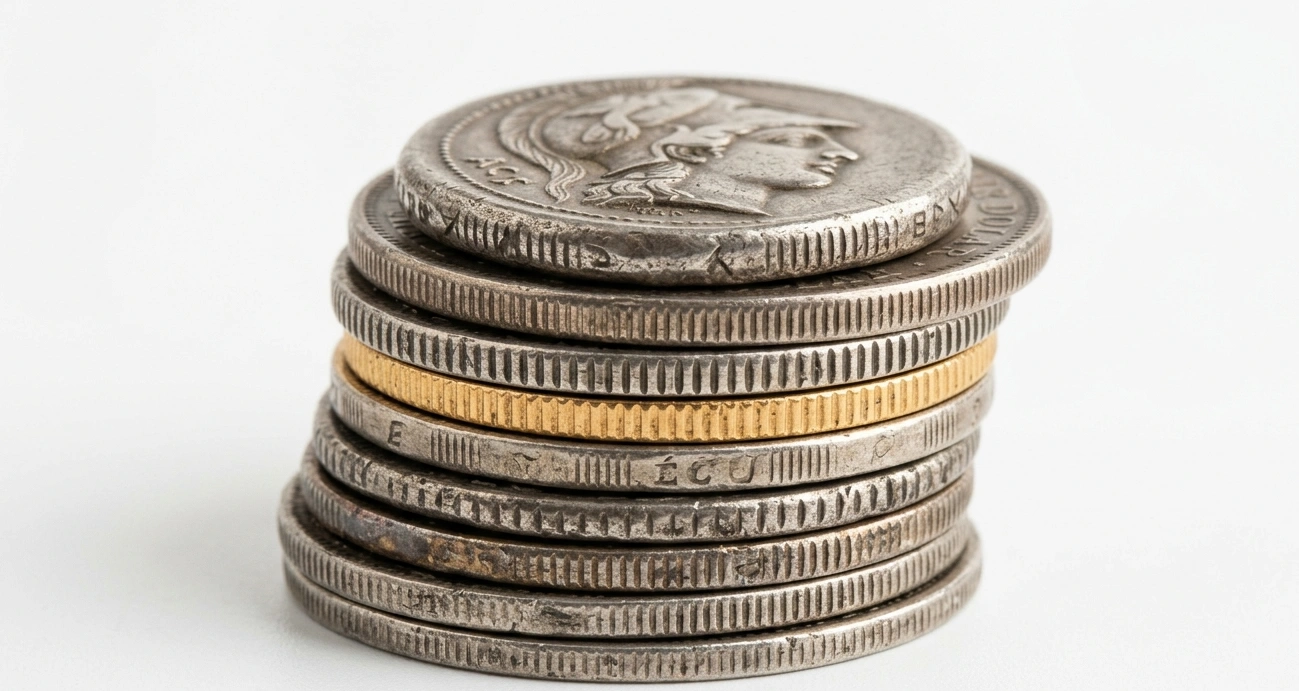
Cost Structure of Realization
Sellers must account for all associated expenses.
Net profit is calculated after deducting taxes and fees.
Expense Item | Percentage of Value | Note |
Platform Commission | 5% — 20% | Volume dependent |
Certification | $40.00 — $150.00 | Fixed per coin |
Insurance & Logistics | 1% — 2% | Mandatory for shipping |
Income Tax | 15% — 28% | 2026 Tax Law |
Reducing logistics costs is achieved through specialized courier services.
Saving on insurance for coins worth over $500.00 is unacceptable.
Authentication Risks and Precision
The 2026 market faces the emergence of high-tech fakes.
Copies made of heavy metal with a Gold coating are only detected via ultrasound.
Selling a non-authentic coin results in a lifetime ban on all platforms.
→ Metal Check → Best Coin Value App Analysis → Database Verification → Listing
Reputable sellers conduct verification before announcing a price.
This eliminates legal claims from buyers.
Legal Framework for Deals
All operations exceeding $10,000.00 require mandatory declaration.
Digital contracts simplify the transfer of ownership rights.
Condition capture at the moment of sale: photo and video protocol
Escrow accounts: holding funds until delivery confirmation
Automatic tax report generation
Precision in documentation prevents bank account freezes.
By 2026, numismatics is fully integrated into the legal financial system.
Working with Dealers: Offer Precision
Contacting a dealer provides an immediate offer.
Dealers factor their profit into the difference between buying and selling prices.
Factors for a dealer offer:
Current monthly demand for specific coin types
Inventory levels of similar items
Resale potential via auction
For 1924 Gold coins, the offer will be roughly 95% of the market.
For Copper coins with signs of cleaning, the offer drops to 50% of the market.
Dealers value liquidity over historical rarity in poor condition.
Price Forecasting Technologies
In 2026, sellers use algorithms to find the best exit point for an asset.
Page views on similar items are analyzed in real-time.
High traffic in the "Morgan Dollar" category signals market readiness for new lots.
Low interest in the "Colonial Coins" segment suggests postponing the sale.
Precision in numismatics involves reading digital footprints of demand.
Role of Historical Context
Precise descriptions of historical significance increase a coin's value.
Presence of provenance adds up to 30% to the price.
Quality provenance elements:
Mention in 20th-century auction catalogs
Ownership by a famous collection
Original envelopes or tags
A coin sold in 1980 from the Eliasberg collection is valued higher in 2026 than a "fresh" specimen.
Continuity of ownership guarantees authenticity and prestige.